

SmartTV
Music video streaming application for TVs and the web
This was the pinnacle of my multimedia work. An application in which you could watch music videos, personalized for you. Additionally, you could watch selected content such as new releases and music news.
It had revolutionary features for its time and platform: You could log in on our website or the mobile app and control your TV application from there (just like Spotify does today). While you personalized your experience or searched for your favorite music videos, you were never disrupted from watching music videos. All menus and controls were rendered on top of the running stream. Back when Netflix still had their old static design, we already had this:
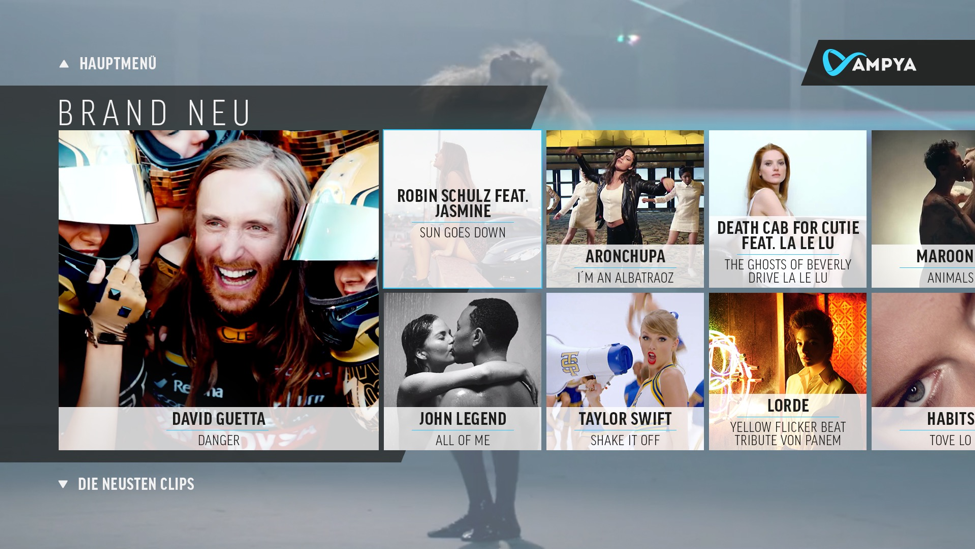
The application was running on Samsung, LG, Philips (and many more) TVs, bundled as application package and marketed through their own app store. Sometimes it came preinstalled in the DACH region. Additionally, the app could be accessed via HbbTV which made it available for TVs not having any app ecosystem. Furthermore, it supported mouse input (some remote controls can behave like a pointer device), voice control-enabled search, and more. We even bundled the application for the Playstation 4, AndroidTV, Roku, Amazon FireTV and much more.

All of these platforms had different needs for video codecs, input methods, data persistence (for storing user settings) and many more. The base technology to support most of these platforms is: a bit of HTML and a lot of JavaScript. In order to support all of their different requirements (sometimes XHTML, sometimes HTML5), I've built a Ruby on Rails webapp that would generate an asset bundle per platform, of course with i18n support and feature flags. During active development, you could run the Rails app in your browser and debug it like you would debug a regular SPA. Once the core development of a feature was done, I still had to verify the details on real hardware. Each brand and model behaved differently. Emulators were the exception.
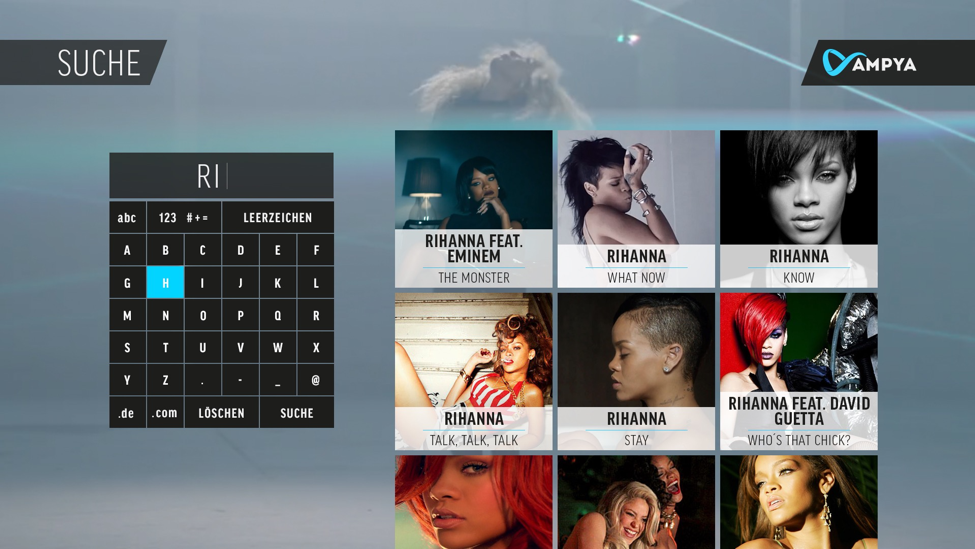
All in all, the core application with all its logic had around 500k lines of vanilla JavaScript. In a domain were debugging is very time-intensive, I've learned to write clean code in order to make the app run as stable as possible. Still, it included graceful atuomatic restarts in case of issues, troubleshooting advice for the end user, and more. I hope that the thousands of active users at the time enjoyed using the app as much as I did refining it.
Unfortunately, the app was terminated as its company was shut down in 2017.